
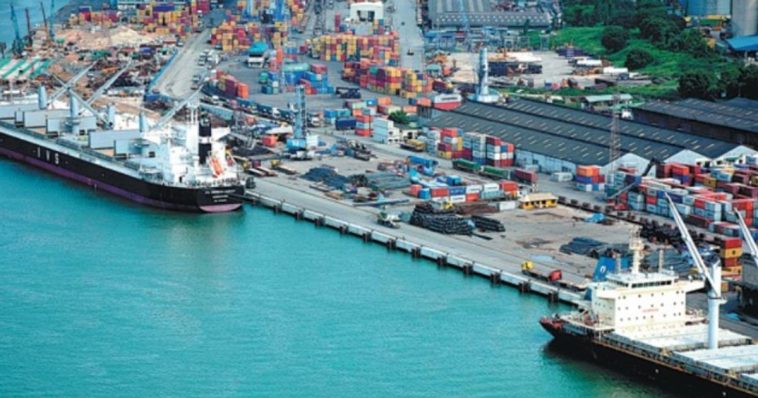

The Tanzanian port of Dar es Salaam handled 27.7 million tonnes of cargo in the 2024/25 fiscal year, regaining strong momentum and making the DRC its leading transit market, according to data published by the Tanzania Ports Authority (TPA).
This represents a 17% increase compared with the 23.69 million tonnes recorded in the previous fiscal year. Volumes destined for the DRC doubled, rising from 2.95 million tonnes in 2023/24 to 5.995 million tonnes last year, the TPA notes.
Transit to Zambia, previously the leading market, also increased, reaching 3.5 million tonnes compared with 2.25 million tonnes in the prior fiscal year. Flows destined for Rwanda reached 1.7 million tonnes.
The growth in cargo destined for the DRC is attributed to Tanzanian investments in dry ports, which serve as logistics platforms for goods arriving in Dar es Salaam and headed to the continent’s interior. In 2024, Tanzania allocated 60 hectares to the DRC for the development of a dry port, with the aim of streamlining the Central Corridor and increasing transshipment.
The TPA notes that the decentralization of services—customs clearance, warehousing, and unloading closer to Congolese economic zones—has reduced delays, lowered freight costs, and made logistics timelines more predictable.
On the infrastructure front, the authority highlights the impact of the standard gauge railway (SGR) and port concessions: DP World, operating berths 0 to 7 under a 30-year concession signed in October 2023, now handles up to 30,000 containers per month, compared with 7,000 previously under TPA management. Tanzania East Africa Gateway Terminal (berths 8 to 11), for its part, has seen monthly volumes climb to as much as 75,000 containers.
To absorb the influx, the TPA is increasing its inland logistics capacity. The Kwala inland container terminal, connected to the port by rail, is designed to handle 300,000 containers per year—30% of Dar es Salaam’s container traffic—in order to ease port congestion.
Over the July–December 2025 period, the port handled 16.7 million tonnes, a 30% increase compared with the same period in 2024, according to the authority’s report, which also notes the rising importance of secondary ports. In Mtwara, capacity rose from 592,000 tonnes in 2021/22 to 2.58 million tonnes in 2024/25; the second phase of expansion at the Port of Tanza increased its annual capacity from 500,000 to 1.29 million tonnes.
“The authority is targeting a tonnage of 54.59 million tonnes over the next five years,” said Josephat Lukindo, Director of Operations Coordination at the TPA. The TPA also sets a more cautious target of 30 million tonnes for next year and confirms its trajectory toward 54.59 million tonnes by 2031. M&B with The East African