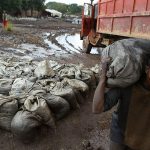

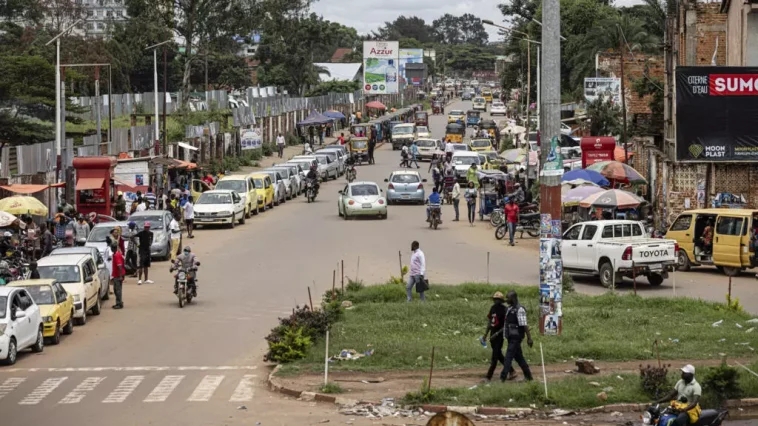

Lubumbashi’s markets were hit again this week. The 25 kg bag of maize flour — the “breakfast,” the staple of the Democratic Republic of Congo’s mining capital — surged from 35,000 to 60,000 Congolese francs in just seven days. A 71% jump on a basic necessity, in the country’s second-largest economic city.
The shock is immediate for households. The individual unit, known locally as the “meka,” now sells at between 4,500 and 5,000 FC, up from 3,000 to 3,500 FC. For a family of five, the weekly food bill has become unsustainable overnight. But behind the immediate shock lies a far older — and far more serious — story.
A Crisis Playing on a Loop
This is neither the first nor the tenth time. Since the 1990s, Lubumbashi has lived through recurring maize crises. In 2018, the bag doubled in price over two days. In 2023, it exceeded 90,000 FC — an all-time record. In April 2025, prices briefly fell back to around 46,000 FC, hailed by provincial authorities as a win. Six months later, the pressure is back.
Each time, the same explanations circulate among traders: Zambia has stopped exporting. Stocks are depleted. The border is effectively closed. And each time, authorities organize a mission to Lusaka, announce an emergency plan, distribute tractors, and promise self-sufficiency within two years.
The numbers are unforgiving. Haut-Katanga consumes around 800,000 tonnes of maize flour per year. Local production covers only 200,000 tonnes. The 600,000-tonne deficit is structurally filled by imports — almost entirely from Zambia, sometimes South Africa or Tanzania. A neighboring country, with its own climatic uncertainties and its own food security priorities, effectively determines the price of bukari in Lubumbashi.
The Curse of the Mining Monoculture
Why doesn’t Haut-Katanga grow its own maize? The answer comes down to one word: mining. Since the colonial era, the province has organized its economy, its labor force, and its investments around copper and cobalt. Agriculture has been the neglected sibling of the mining boom. Arable land is not lacking — the Lufira valley, the Territory of Kambove, producing zones in Haut-Lomami and Tanganyika could theoretically feed the province. But they remain underexploited, for lack of infrastructure, adapted seeds, agricultural credit, and accessible markets.
Roads are a major obstacle. During the rainy season, reaching Kamina or Manono from Lubumbashi can take a full month. Under those conditions, locally grown maize costs more to transport than Zambian maize trucked in from Kasumbalesa.
Yet the DRC sits on approximately 80 million hectares of arable land — one of the greatest agricultural potentials on the planet. This reality, repeated as a mantra in official speeches, does not translate into the food on Lubumbashi’s tables.
Responses That Fall Short
Successive governments have multiplied short-term fixes. In May 2023, Kinshasa and Lusaka signed an agricultural cooperation agreement, with Zambia committing to supply seeds and fertilizers to help the DRC boost local production. Deputy Prime Minister Vital Kamerhe announced an emergency program worth one billion two hundred million dollars for the maize sector. Three years later, the impact on Lubumbashi’s markets is imperceptible.
At the provincial level, Governor Jacques Kyabula has since 2019 built a subsidized agricultural villages program, aiming to reduce external dependency. Tractors were again distributed to Grand Katanga farmers in December 2024 and September 2025. The National Service reports growing output: 25,000 tonnes of maize in 2025, targeting 50,000 tonnes in the current season. Real progress — but still nowhere near the 600,000-tonne deficit.
The Mining Province That Cannot Feed Itself
The equation is paradoxical, but revealing. Haut-Katanga concentrates a major share of the DRC’s copper and cobalt exports — minerals on which the global energy transition depends. Mining revenues fuel both provincial and national budgets. And yet, the province allocates only between 2 and 3% of its budget to agriculture.
This prioritization — implicit, never truly debated — carries a direct social cost. Every maize price spike hits first the most vulnerable segments of Lubumbashi: mine workers and their families, small traders, households in popular neighborhoods like Camp Scout or Kilobelobe. The food security of the world’s mining capital depends on decisions made in Lusaka.
Until this dependency is treated as the structural emergency it is — rather than a crisis to be managed case by case — Lubumbashi’s markets will keep flaring up. The next mission to Zambia will not change a thing.
M&B