

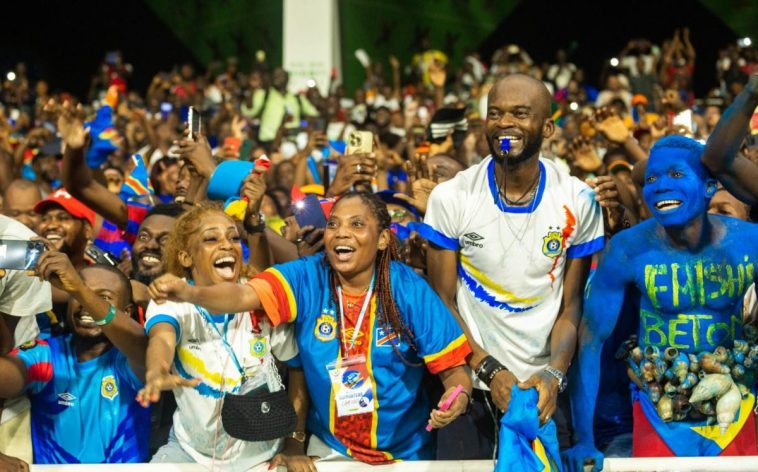

The national team secured its ticket to the World Cup finals by narrowly defeating Jamaica, one goal to nil after extra time. The savior of the match, who scored the only goal in the 100th minute from a perfectly executed corner kick, offered an entire nation a moment of eternity. After more than half a century of frustration and unfulfilled attempts, the team finally reconnects with the global dream, one that seemed reserved for others. It is a sporting victory, of course, but also a collective achievement, the fruit of perseverance, passion, and an unwavering faith in the possibility of renewal.
In the streets of Kinshasa, as in all the country’s major cities, popular jubilation took hold of the crowds deep into the night. Trumpets, songs, dances, honking horns: emotion overflowed everywhere. This is not just a success on the pitch; it is the rehabilitation of a long-buried dream. In this qualification, the people found the mirror of their own resistance, a demonstration that tenacity and courage always end up triumphing. The date of this March 31, 2026, will remain engraved in the collective memory, a symbol of rebirth and hope for an entire generation.
But this qualification goes beyond national borders. It is part of a historic moment for the entire African continent. For the first time, ten nations will represent Africa at the upcoming World Cup. Ten flags, ten styles, ten different stories united by a single ambition: to show the world that African football deserves its place among the great powers of the game. These national teams, coming from the north to the south, from the east to the west, illustrate the vitality of a continent that is too often underestimated but never resigned.
This edition promises to be a major turning point. Despite persistent difficulties—a lack of modern infrastructure, limited financial resources, and sometimes shortened preparation—passion remains the central engine of this adventure. African football is moving forward, driven by new talents and a fervor that nothing can extinguish. It is no longer just about participating, but about aiming high and dreaming fearlessly.
Ever since the historic performance of an African team reaching the semi-finals for the first time in the previous tournament, confidence has taken root. This time, the goal is clear: push past limits, reach new heights, and why not, go after the world trophy. Africa is entering an era of sporting maturity, aware of its potential and determined to write a new page in its history.
The next World Cup, scheduled from June 11 to July 19, 2026, in the United States, Canada, and Mexico, will be much more than a competition. It will be a global celebration where the voice of the African continent will resonate louder than ever. And at the heart of this adventure, the triumphant return of Congo to the world stage already resonates as one of the most beautiful emotions of this sporting year.