
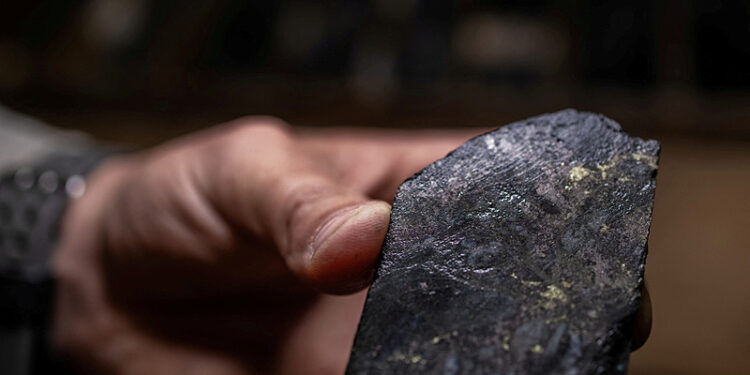

U.S. company Virtus Minerals has announced the completion of its acquisition of Chemaf, one of the last major cobalt producers in the Democratic Republic of Congo (DRC) still independent from Chinese influence. This transaction, which includes the well-known Mutoshi deposits (Lualaba Province) and the Etoile site (near Lubumbashi), marks a major turning point in the global race for critical metals essential to the energy transition and electric battery manufacturing.
In a context where China currently controls nearly 70% of global cobalt refining and holds stakes in the majority of Congolese mines, the American breakthrough appears as a strategic counteroffensive. For several years, Washington has been seeking to diversify its supply sources and reduce its dependence on Beijing, particularly in the lithium-ion battery sector, which is crucial for electric vehicles, smartphones, and renewable energy storage.
The acquisition of Chemaf by Virtus Minerals is therefore far more than a commercial transaction—it is a geopolitical move. It confirms the United States’ intention to reestablish a foothold in Africa’s mining heartland, where a key part of the global energy transition is unfolding. For Kinshasa, this deal also aligns with the government’s strategy to attract new foreign partners capable of bringing capital, technology, and stricter environmental standards, while preserving the country’s economic sovereignty.
However, the acquisition also raises questions. Some observers fear that the DRC could once again become the arena for rivalry between major powers, where local interests risk being sidelined. Working conditions in artisanal mines, contract transparency, and local value addition remain pressing issues.
The Congolese government states that it intends to strengthen state oversight and promote local refining, so that cobalt is no longer exported in its raw form.For Virtus Minerals, the challenge is also industrial: the company will need to demonstrate its ability to modernize infrastructure, implement responsible mining practices, and reassure investors about the country’s stability. Effective management of these sites could turn Mutoshi and Etoile into models of balanced cooperation between foreign partners and Congolese stakeholders.
On the international stage, this American move is part of a broader competition for control of critical minerals, similar to lithium and nickel. The European Union, Japan, and South Korea are also increasing efforts to secure their supply chains.Thus, the transaction between Virtus Minerals and Chemaf goes far beyond economics: it symbolizes a geopolitical reshaping of global cobalt production, at the intersection of strategic interests, environmental ambitions, and African development challenges.
For the DRC—rich in resources yet still institutionally fragile—this partnership could represent a historic opportunity to better harness its mineral wealth, provided that the benefits finally reach its population.