


A rare public dispute has erupted between the Democratic Republic of Congo’s central bank and its finance ministry over the impact of the national currency’s appreciation on state revenues, exposing a significant rift in economic messaging at the close of 2025.
The conflict unfolded on the social media platform X. It began on December 3 when the Central Bank of Congo (BCC) posted an analysis stating that the appreciation of the Congolese franc (CDF) on the foreign exchange market “has not hindered the mobilization of public revenues.” The bank asserted that revenue “achievements have systematically exceeded targets since the beginning of the year,” including in November.
To support its claim, the BCC published a chart showing fiscal revenues rising from approximately 3,000 billion CDF in January to 26,265.3 billion in November. This figure, it stated, exceeded the target of 25,658.8 billion by 606 billion CDF, representing a realization rate of 102.3%.
The central bank’s post reinforced an narrative of macroeconomic stabilization, suggesting the currency’s strength coincides with rising state income.
“Erroneous and Inaccurate Analysis”
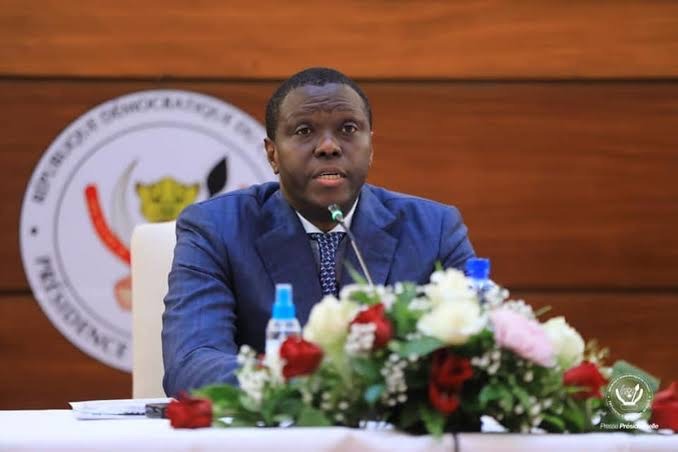
The reaction from the Ministry of Finance was swift and blunt. The office of Finance Minister Doudou Fwamba countered that the BCC’s conclusion was “erroneous and inaccurate, as it is based on cumulative revenues that even include tax advances.”
In a context requiring “the coordination of economic policies,” the ministry stated, such a conclusion was “misleading.” It argued that “the International Monetary Fund’s framework for the last quarter of 2025, as well as data from the financial administrations, confirm the loss of revenues” linked to the rapid appreciation of the Congolese franc.
Broader Implications for Policy Credibility
The public spat has drawn attention from economists concerned about policy coherence. Jean-Paul Tsasa, a macroeconomist and director of the Interuniversity Center for Research in Mathematical Economics, commented extensively on X, framing the exchange as more than a technical debate.
“What is at stake goes beyond political considerations: it affects the lives of citizens and investment projects,” Mr. Tsasa wrote. He emphasized that “coordination between the Central Bank and the Ministry of Finance is indispensable to maintain the coherence of the macroeconomic direction, avoid contradictory signals, and strengthen the credibility of public policies.”
Regarding the BCC’s data, he urged analytical caution: “Apparent performance is not always real performance. Raw data can mask deep structural trends. A strong currency can protect in the short term but weaken in the medium term.”
Mr. Tsasa suggested the two positions might not be mutually exclusive but could “simply reflect differences in statistical scope (cumulative versus current), time horizon, or methodology. It is therefore possible that they describe complementary rather than opposing aspects.”
The public disagreement underscores the challenges facing Congolese economic managers as they navigate currency volatility and strive to project a unified front to international markets and institutions. Elisha IRAGI for M&B Magazine