
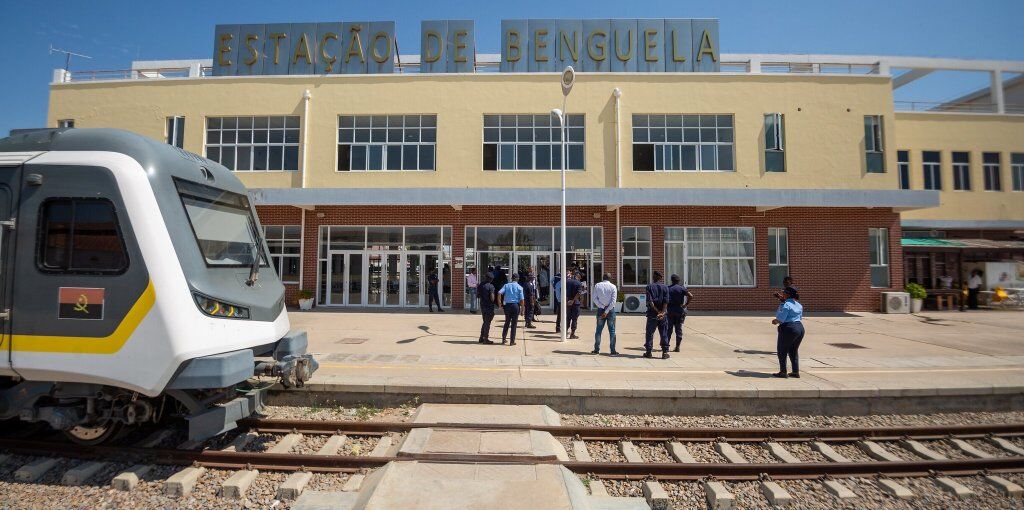
Beyond mining exports
In New York, on the occasion of the 81st session of the United Nations General Assembly, Prime Minister Judith Suminwa defended this orientation, presenting the Lobito Corridor as a tool for regional industrialization. For the Congolese government, the challenge is to make the rail more than a route for evacuating minerals to the Atlantic Ocean.
A corridor serving industry
The vision is based on the development of an ecosystem combining transport, energy, industry, agriculture and trade. Kinshasa notably wishes to promote the establishment of industrial activities along the corridor so that a larger share of the value derived from mining resources is created locally.
Rehabilitation of the railway network
The Congolese component of the project provides for the rehabilitation and development of the rail axis linking in particular Kolwezi, Lubumbashi and Sakania, with a connection to the west of the country. In July 2026, the government had adopted a public-private partnership project dedicated to the development of this infrastructure.
In August, the DRC and Mota-Engil Africa also signed a collaboration agreement and a railway concession contract covering the Dilolo-Sakania axis.
Creating more value in the DRC
For Kinshasa, improved connectivity must accompany investments in energy, industrial infrastructure and value chains related to copper, cobalt and other strategic minerals.
The Lobito Corridor is thus called upon to support the development of regional value chains, particularly in the sectors of transition minerals, batteries and new industries.
The challenge of implementation
Financing, the effective rehabilitation of infrastructure, energy availability and the attractiveness of the business climate remain decisive. For the DRC, the challenge will be to transform rail investments into productive activities and jobs, so that the Lobito Corridor is not only an export route, but also a tool for industrialization.
Héritier Maila
About The Author

Commentaires