
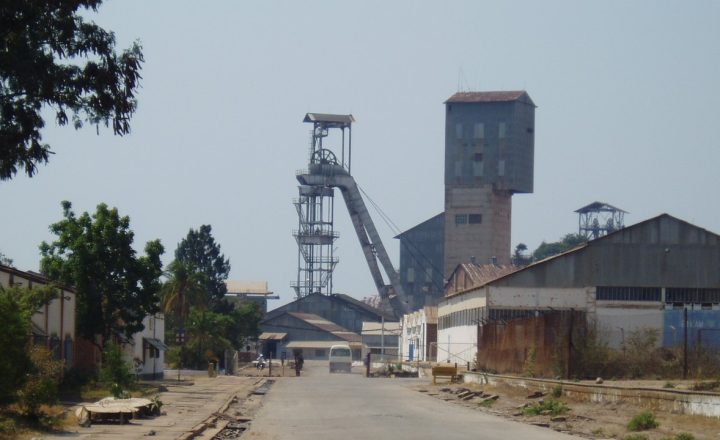
The past year will go down as a turning point for the Congolese mining industry. The world’s leading cobalt producer (about 73-74% of supply, or nearly 220,000-230,000 tonnes in 2025 depending on the source) and the second-largest copper producer (around 3.4 to 3.5 million tonnes), the Democratic Republic of Congo has become a player that steers the market.
With cobalt prices at their lowest, Kinshasa suspended exports in February 2025 before introducing, from October, a quota regime managed by ARECOMS: 96,600 tonnes a year for 2026 and 2027. The effect was immediate. Prices recovered, the market swung from a massive surplus to an anticipated deficit, and operators had to refocus their priorities on copper, a metal not subject to quotas. This policy of “controlled scarcity” has restored margins to the State, even though it has also tied up stocks and heightened tensions with some producers.
At the same time, the government has multiplied its structural commitments. Local processing, local content, formalization of artisanal mining (64 targeted zones in Lualaba and Haut-Katanga), stronger traceability and certification, airborne geophysical mapping of 35% of the territory: there are many projects under way. The local content law, effective on 1 January 2027, and annual audits of the major operators from 2027 illustrate this determination to capture more value on the ground. Partnerships are also diversifying: acceleration of dialogue with the United States (strategic minerals, Lobito corridor, Inga), stronger dialogue with China and regional cooperation through the International Conference on the Great Lakes Region (ICGLR) and Zambia.
The global context remains supportive. Cobalt demand is expected to keep growing in 2026-2027 despite the rise of LFP batteries, driven by electric vehicles. For copper, medium-term projections point to a structural deficit from 2028, which reinforces the strategic role of the Congolese Copperbelt. The national deadlines of 2027 will be decisive: effective enforcement of the local content law, compliance audits, legislative progress on mineral processing and preparation of the Forum on Critical Minerals and Industrialization. In a national political environment marked by debates over the 2028 electoral calendar and stability in the East, the State’s ability to turn these ambitions into concrete results will be closely scrutinized.
The DRC has shown that it can weigh on global supply. The challenge for 2027 will be to combine this asserted sovereignty with the attractiveness needed to finance local processing, infrastructure and formalization, while maintaining investor confidence. It is on this condition that Congolese subsoil will be able to serve national development in the long term rather than only global value chains.
On behalf of the editorial team, I wish you happy reading and a joyful end-of-year holiday season.
Olivier Loury
Article published in M&B Magazine No. 69 (November-December 2026) — read the magazine.
About The Author

Commentaires