
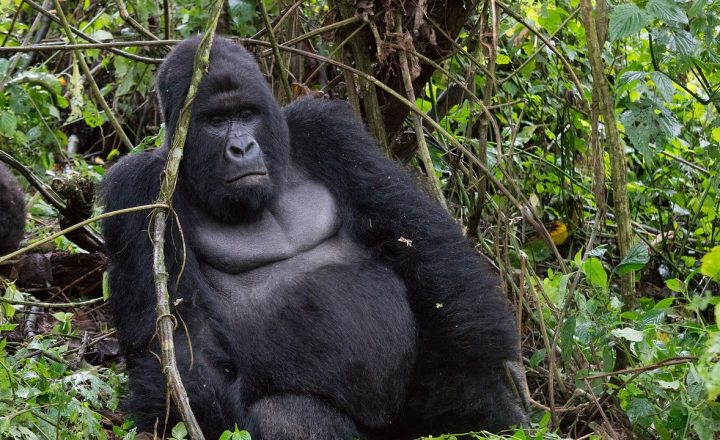
Forests listed as UNESCO World Heritage sites are a major natural heritage and a genuine environmental capital. According to UNESCO, more than 200 World Heritage sites host forest ecosystems, covering more than 69 million hectares. Each year, these forests absorb about 190 million tonnes of CO₂ and store nearly 13 billion tonnes of carbon in their trees and soils.
The Congo Basin at the heart of the stakes
After the Amazon, the Congo Basin is the world’s second-largest tropical forest block. It extends over about 1.6 million km² across several Central African countries, including the Democratic Republic of Congo (DRC), which hosts the largest part of it.
The DRC has five natural World Heritage properties: the Virunga, Garamba, Kahuzi-Biega and Salonga national parks, as well as the Okapi Wildlife Reserve. These areas shelter exceptional biodiversity and help regulate the climate. In the Congo Basin, nearly 30 million people depend directly on forest resources for their livelihoods.
A stake for the mining sector
Protecting these ecosystems also concerns economic activities, notably the mining sector. In a country like the DRC, which has both significant reserves of strategic minerals and an exceptional forest heritage, the question of the compatibility between resource exploitation and environmental preservation arises acutely.
UNESCO recalls that mining and other extractive activities are prohibited within the perimeters of the five Congolese World Heritage sites. Projects likely to affect these areas must also receive particular attention from an environmental standpoint.
Reconciling minerals and conservation
As the global energy transition boosts demand for copper, cobalt, lithium and other critical minerals, the DRC finds itself at the centre of international supply strategies. This dynamic reinforces the need for responsible exploitation of natural resources.
Forest protection depends notably on better land-use planning, respect for protected areas, environmental impact assessment and the restoration of sites affected by economic activities.
For the DRC and the other Congo Basin countries, the challenge is therefore to turn their mineral wealth into economic development while preserving a forest heritage whose ecological, climatic and social value goes far beyond national borders.
Héritier Maila
Article published in M&B Magazine No. 69 (November-December 2026) — read the magazine.
About The Author

Commentaires