
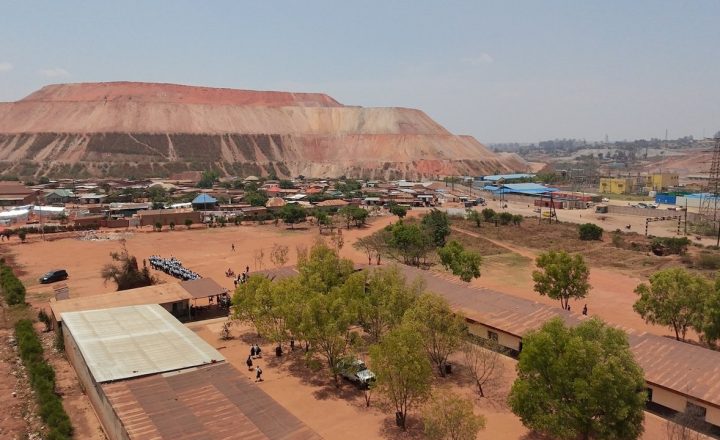
Behind the copper and cobalt volumes produced by Tenke Fungurume Mining (TFM), environmental and health concerns persist in several communities within its concession. A report by the non-profit CASMIA-G on the villages of Ndela wa Ntanshi, Ndela-Nguza, Ndela-Kasanga and Kiboko-Amoni has thus revived the debate on the impacts of mining in the Democratic Republic of Congo.
Environmental and health concerns
Based on findings and community testimonies, CASMIA-G reports several concerns relating in particular to the environment, crops and the health of local populations. The organisation calls on the authorities to carry out independent environmental and health investigations to verify the reported facts and establish any responsibilities.
Where harm is proven, the non-profit recommends applying the polluter-pays principle and compensating victims in accordance with Congolese law. It also advocates the adoption of the order on diseases attributable to mining activities.
TFM at the heart of the mining debate
These concerns come at a time when TFM holds a strategic place in Congolese copper and cobalt production. Gécamines holds 20% of the company’s capital, against 80% for the Chinese group CMOC.
The presence of this major Chinese investor comes as the United States is simultaneously stepping up its interest in the DRC’s critical minerals. This reshaping of mining partnerships raises an essential question: must the country choose between Chinese and American influence?
For the DRC, the aim should rather be to play the various partners off against each other in order to secure more economic and social benefits: local processing, jobs, technology transfer, public revenue and Congolese participation in the capital.
Mining performance is not measured in tonnes alone
The CASMIA-G report above all recalls that a mining project cannot be assessed solely through its production volumes or its investments. Its impact on communities and the environment must also be part of the balance sheet.
The DRC should therefore not seek to replace one dependence with another. It should rather use its critical minerals as a lever of economic sovereignty, while imposing on all investors, whatever their nationality, the same requirements for environmental protection, public health and local development.
M&B Magazine – CASMIA-G
Article published in M&B Magazine No. 69 (November-December 2026) — read the magazine.
About The Author

Commentaires