
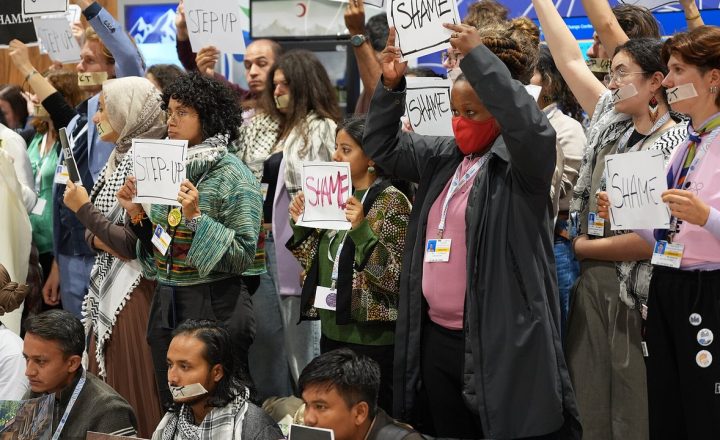
Closed on 22 November 2026 in Antalya, Türkiye, the 31st United Nations Climate Change Conference delivers a mixed outcome. Despite several decisions on adaptation and climate finance, persistent disagreements over fossil fuels and the financial commitments of developed countries limited the summit’s impact.
COP31 was supposed to give fresh momentum to the implementation of the Paris Agreement. It ultimately ended in a fragile compromise, revealing the divisions that persist in international climate diplomacy. In all, 46 decisions were adopted, notably on adaptation to climate change, just transition and financing mechanisms for vulnerable countries.
These advances are a gain for developing economies, which are particularly exposed to droughts, floods and extreme weather events. However, they remain insufficient given the financial and technological needs required to address the climate emergency.
Finance and fossil fuels at the heart of the deadlock
The issue of climate finance once again crystallised tensions. Developing countries denounced the inadequacy of commitments for adaptation, while their needs are growing in the face of the consequences of global warming.
Negotiations also stalled on cutting greenhouse gas emissions and the future of fossil fuels. No consensus was reached on the mitigation work programme, with discussions postponed to June 2027 in Bonn, Germany.
Another diplomatic setback: the draft political declaration known as the “Antalya Pact” was rejected by around 90 countries. Several delegations notably regretted the lack of a sufficiently clear reference to the phase-down of fossil fuels.
Africa faces the limits of climate solidarity
For the African continent, the outcome remains worrying. Weakly responsible for global emissions, Africa remains particularly vulnerable to climate disruption. Access to financing, clean technologies and loss and damage compensation mechanisms is therefore a priority.
For the Democratic Republic of the Congo, these issues are strategic. With the forests of the Congo Basin, its hydropower potential and its natural resources, the country has significant assets in the global energy transition. Making the most of them, however, requires substantial investment and balanced international partnerships.
In the end, COP31 cannot be considered a total failure, given the decisions adopted. But it is far from a political success. The Antalya summit produced institutional progress without resolving the main differences between states. The real challenge will now be to turn these commitments into accessible financing and concrete action.
HÉRITIER MAILA
About The Author

Commentaires