
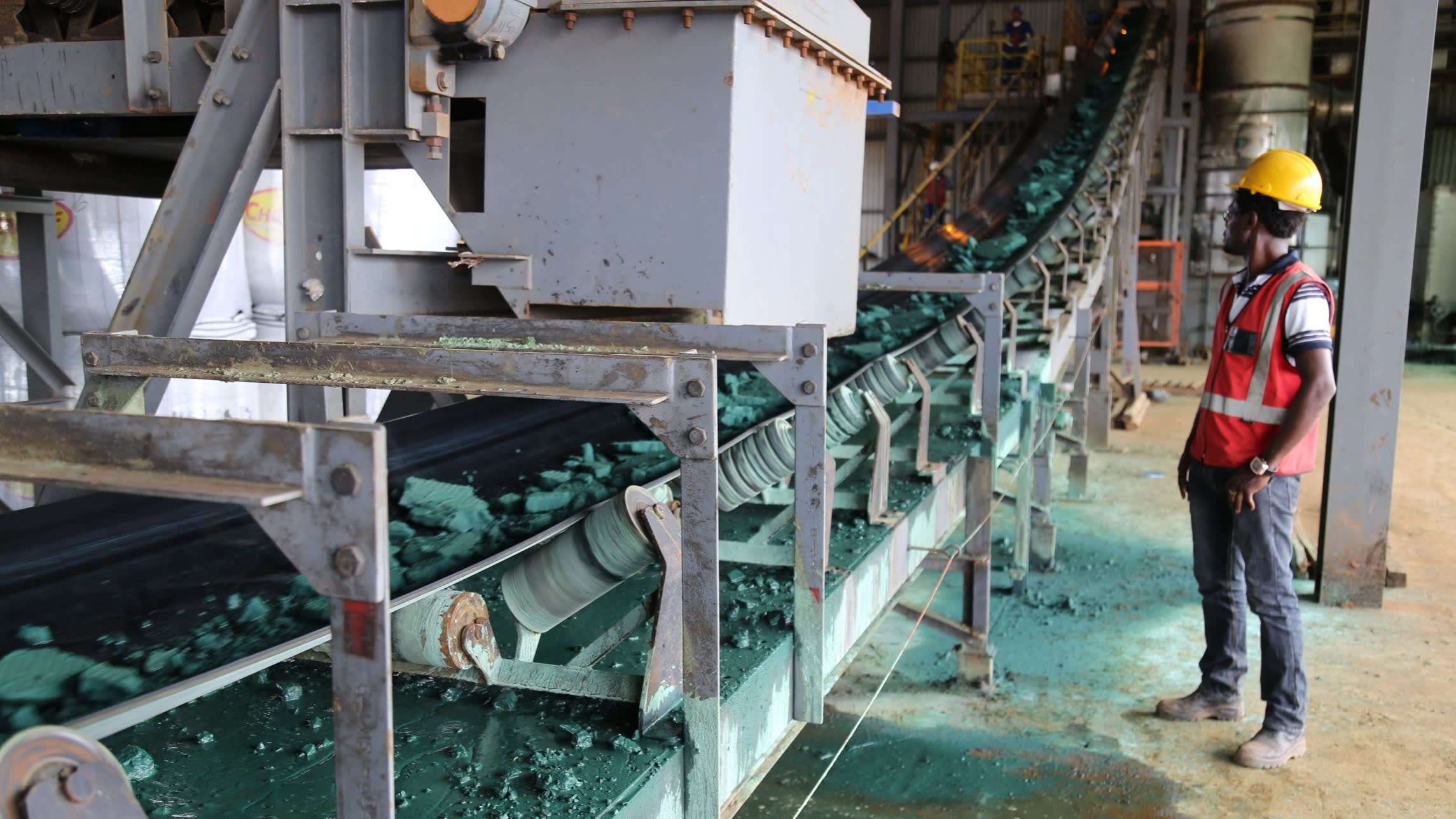
Cobalt, copper and critical minerals are no longer ordinary commodities. They have become strategic assets at the heart of the energy transition, industrial sovereignty and geopolitical competition.
In this context, the Democratic Republic of Congo occupies a central position. As the world’s leading cobalt producer and a major copper player, the country has become indispensable to global value chains.
A contested strategic space
The DRC is no longer simply an investment destination. It has become a strategic space where the interests of major powers, industrial players, financial institutions and public authorities intersect.
The growing interest of the United States in the Congolese mining sector reflects this shift. In the context of competition with China, Washington is seeking to secure access to critical mineral supplies.
Asset ownership or flow control
The central issue is no longer only the ownership of mining assets. Today, control over flows is becoming just as strategic.
Through offtake agreements, structured financing and commercial partnerships, some actors can secure access to resources without necessarily owning the assets. This evolution is reshaping power dynamics in the mining sector.
An opportunity for Congolese actors
This transformation could open a strategic space for Congolese players. It suggests that local ownership of assets can be preserved while still integrating into global value chains.
But this opportunity depends on the ability of local actors to organize, mobilize financing and negotiate balanced partnerships. Without that, the risk remains that value will continue to be captured externally.
The institutional challenge
The DRC’s geological potential remains immense, with a large share of resources still undeveloped. But the main challenge is not only geological. It is institutional.
Overlapping mandates, regulatory complexity and the intervention of non-competent services create legal uncertainty that can weaken investment decisions.
To capture more value, the State must clarify the framework, strengthen policy coherence and support the emergence of local actors capable of participating in higher-value segments such as refining, processing and manufacturing.
A sovereignty issue
Mining has become a sovereignty issue. For the DRC, the question is no longer simply who invests in the country, but who controls the value generated by its resources.
The country is at a turning point: it can either endure global dynamics or structure them to its advantage.
About The Author

Commentaires