
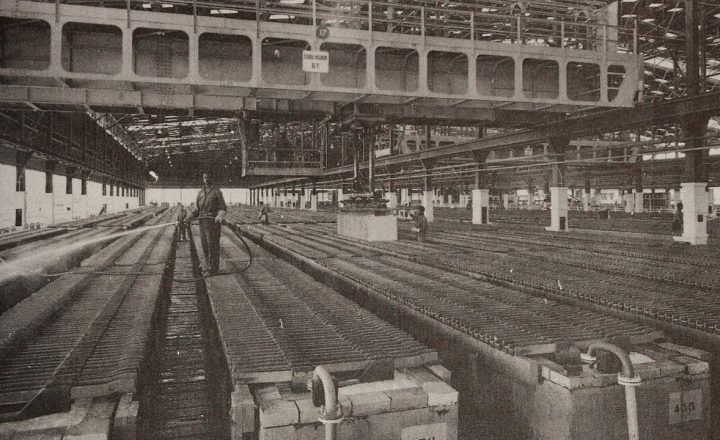
In the Democratic Republic of Congo, copper is one of the pillars of the economy and a major driver of exports. According to the USGS, mined copper production reached about 2.99 million tonnes in 2024, compared with 2.93 million in 2023. That same year, copper accounted for 79.3% of the country’s export value. These figures illustrate the strategic weight of the sector, notably in Haut-Katanga and Lualaba.
This activity brings in foreign currency and public revenue and attracts investment. It also stimulates related sectors: transport, energy, telecommunications, construction, trade and services. Mines need roads, power lines, equipment and labor; their suppliers can therefore also benefit from their expansion. In 2022, data compiled by EITI-DRC put at USD 5.912 billion the revenues generated by the industrial mining sector for public administrations at national, provincial and local levels.
But these amounts alone do not tell how much of this wealth actually improves the lives of Congolese people. Production and revenues can grow without jobs, wages and public services rising at the same pace. The World Bank estimates that the DRC’s GDP grew by 6.5% in 2024, mainly thanks to mining activities. It stresses, however, that this growth remains heavily dependent on the extractive sector and that job creation is not keeping pace with GDP: employment has grown by an average of about 3% a year.
Mining growth is also vulnerable to fluctuations in global prices, to international demand and to the trade choices of key partners. A fall in prices or a slowdown in demand can weigh on exports, State revenue and investment. The country thus remains exposed to decisions taken in markets that it barely controls. The concentration of exports on minerals makes this dependence particularly significant.
Moreover, a rise in GDP does not automatically guarantee an improvement in purchasing power. If the prices of food, fuel, housing and transport rise faster than household incomes, the effects of growth remain barely visible in daily life. Producing regions can sit alongside highly capitalized industrial sites while lacking passable roads, schools, health centers, drinking water and reliable electricity.
Crises and conflicts compound these difficulties. They displace populations, destroy infrastructure and tie up public resources that would also be needed for education, health and social protection. It is therefore not enough to note that companies are investing or that minerals are being exported: revenues must be traceable, their collection verified and the benefits for the territories concerned measured.
Copper alone is not enough to guarantee inclusive growth
The challenge is not only to extract more copper, but to better convert this resource into collective progress. This requires transparent management of revenues, contracts and payments, as well as effective monitoring of companies’ tax, social and environmental obligations. Publishing the data must allow citizens to compare what is owed, what is actually paid and what goes to communities. In this regard, EITI-DRC reports are a source for tracking extractive payments and revenues.
Mining revenues must also produce visible benefits in the provinces where extraction takes place. A predictable share of revenues should support well-planned public investment: schools, health facilities, roads, water networks and access to electricity. This requires published budgets, evaluated projects and mechanisms allowing communities to take part in decisions and report shortcomings. The benefits should not be judged solely by the amount spent, but also by the quality of the services provided and their accessibility.
Local content is another lever. Mining companies can increase their purchases from Congolese suppliers, strengthen workers’ skills and support local processing where infrastructure and economic conditions allow. The aim is not to promise that all production will be processed on site, but to gradually create more value in the country: equipment maintenance, materials manufacturing, specialized services, metal processing and development of technical skills. Clear and predictable rules can help local companies invest and meet the sector’s requirements.
Diversifying the economy as a priority
The DRC must also reduce its dependence on a single resource. Agriculture, agro-industry, manufacturing, trade and services can create jobs that are more widely spread across the territory. Diversification cannot be decreed: it requires roads, available and affordable energy, skills, access to finance and stable rules. But it is essential to cushion the shocks linked to copper prices and to offer prospects to a population far larger than the one directly employed by the mines.
Copper can accelerate GDP growth, but it cannot, on its own, guarantee development. Economic success will not be measured only by tonnes produced or revenues recorded. It will depend on the State’s ability to mobilize and publish revenues, on companies’ ability to honor their commitments, and on the country’s ability to turn this wealth into jobs, public services and lasting productive activities.
Without these conditions, growth may remain high in the statistics but weak in the daily lives of many citizens.
M&B Magazine
Article published in M&B Magazine No. 69 (November-December 2026) — read the magazine.
About The Author

Commentaires