
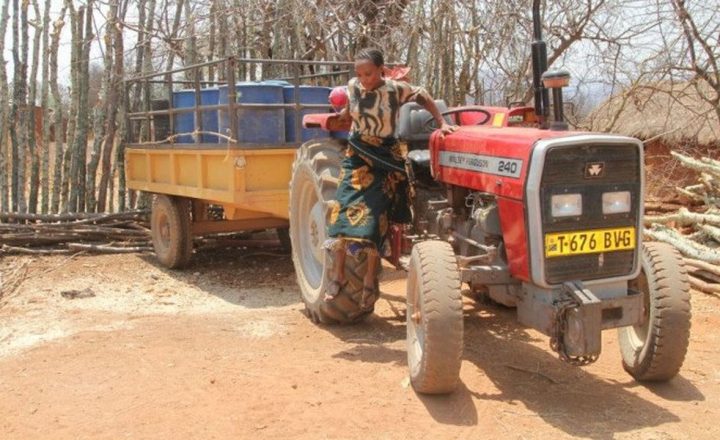
Economic cooperation between the Democratic Republic of Congo and Italy is increasingly focused on developing the agricultural sector. Under the Mattei Plan, launched by the Italian government, an overall envelope of 600 million US dollars is envisaged to support rural Congolese farming cooperatives, notably through the purchase of production equipment and machinery.
According to information reported by the Congolese Press Agency (ACP), 85% of the funding, equivalent to 510 million USD, would be provided by the Italian side, while the Congolese contribution would account for the remaining 15%, or 90 million USD.
The announcement was made by Grégoire Mutshail, Minister of Rural Development, on his return to Kinshasa after an official mission to Rome, Italy. The mission was part of a programme involving the Enrico Mattei Foundation and the Mattei Plan, an Italian framework intended to strengthen development partnerships with African countries.
For the Congolese government, this co-financing mechanism is an opportunity to give multisectoral and multipurpose rural cooperatives easier access to the equipment they need for their activities. The ambition is notably to strengthen the operational capacity of farmers’ organisations and improve production conditions in rural areas.
A lever for the rural economy
Beyond the purchase of equipment, this initiative carries significant economic stakes for the DRC. The mechanisation deficit, difficulties in accessing inputs and inadequate infrastructure are among the constraints limiting the development of Congolese agriculture.
Access to suitable equipment could thus help improve productivity, reduce the arduousness of farm work and turn rural activities into genuine economic hubs. Better-equipped cooperatives could also strengthen their ability to supply local markets and take greater part in agricultural value chains.
However, whether this envelope materialises will depend on the programme’s operating arrangements, the selection of beneficiary cooperatives and the mechanisms for managing the equipment. User training, equipment maintenance and monitoring of investments will also be decisive in ensuring lasting results.
For the DRC, the challenge will therefore be to turn this financial partnership with Italy into productivity gains and lasting economic opportunities for rural populations. The scheme’s success will be measured less by the amount announced than by its real impact on the production capacity and incomes of the beneficiary communities.
HÉRITIER MAILA
About The Author

Commentaires