
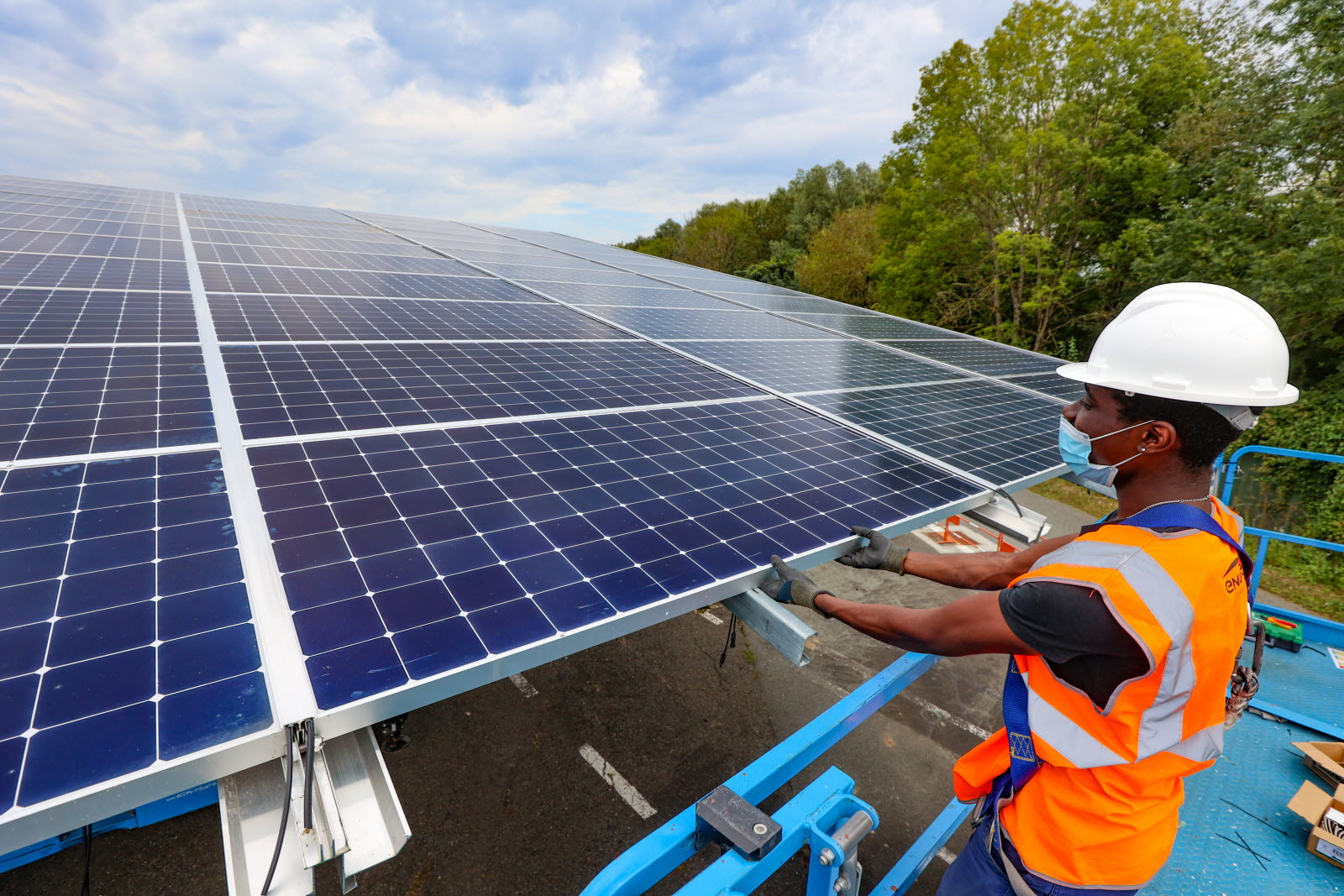
In Manono territory, Tanganyika Province, the photovoltaic power plant commissioned in 2018 is facing another breakdown that is disrupting the electricity supply.
The situation is once again raising questions about the reliability and maintenance of energy storage infrastructure in isolated electricity networks in the Democratic Republic of the Congo.
A System Dependent on Storage
Commissioned by Congo Energy, a subsidiary of the Forrest Group, the Manono solar power plant supplies an isolated grid operated by the National Electricity Company (SNEL).
Its system includes a battery bank with a capacity of approximately 3 MWh, designed to store the energy generated during the day.
This storage system plays an essential role in ensuring continuity of electricity supply. In particular, it makes it possible to maintain power supply at night or when sunlight is insufficient.
The plant was designed to meet the energy needs of the local population. During the first phase of the project, the objective was to serve approximately 600 subscribers, with 250 connections. The second phase was expected to increase the number of prepaid meters to 350.
Problems Had Already Been Reported
The current breakdown comes after the plant had already experienced problems related to its batteries.
In May 2025, difficulties affecting the storage system had notably been reported, with consequences for Manono’s electricity supply.
The recurrence of these incidents highlights the importance of battery maintenance and replacement in solar installations equipped with storage systems.
While photovoltaic panels generate electricity during daylight hours, storage capacity directly determines the availability of electricity outside these periods.
A Major Issue for a Region with Mining Potential
Beyond household needs, the energy issue is particularly important for Manono, a territory with significant mining potential, particularly in lithium.
Reliable electricity supply is indeed a determining factor in supporting the economic and industrial development of a region expected to attract more investment.
The breakdown of the solar power plant therefore serves as a reminder that the deployment of renewable energy in the DRC must be accompanied by a sustainable strategy for maintenance, equipment replacement, and the security of storage systems.
For Manono, restoring the plant to service and improving its reliability appear essential both for households and for the economic activities expected to develop in the territory.
Héritier Maila / La Guardia Magazine
About The Author

Commentaires