
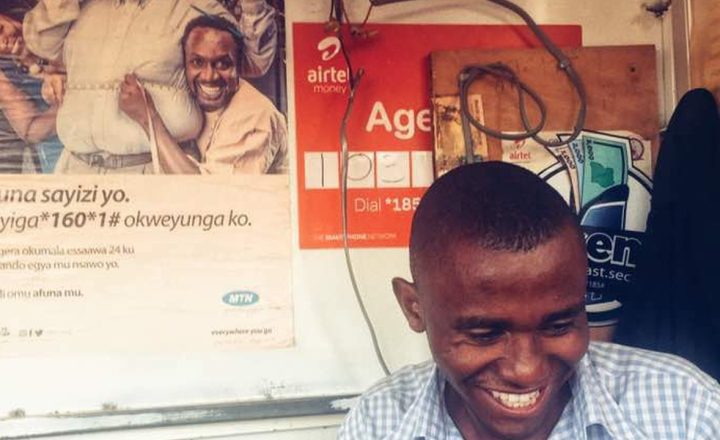
The licence granted to Wave by the Central Bank of Congo (BCC) opens a new chapter in the digital payments sector. Now the fifth electronic money institution authorised in the DRC, the operator intends to compete with M-Pesa, Airtel Money, Orange Money and Afrimoney, notably through competitive pricing.
Announced on 17 November 2026 and confirmed the following day by the BCC, the authorisation comes after more than eleven years without a new licence in this category. Wave is now authorised to issue electronic money directly in the Democratic Republic of Congo.
Pricing as a lever
Before obtaining the licence, Wave operated in the DRC under a partnership with Ecobank, which handled the issuance of electronic money. The fintech provided the technology platform and the distribution network. Its new status allows it to operate directly in this activity, under the supervision of the BCC.
The company plans to rely on competitive pricing. In Senegal, where it launched in 2018, Wave popularised person-to-person transfers charged at 1%, pushing competitors to review their prices. Its website also advertises fee-free bill payments and free deposits and withdrawals. However, its tariff schedule for the DRC has not yet been published: these terms are therefore not guaranteed on the Congolese market.
Wave is also targeting small businesses, with solutions designed to facilitate payments between customers, suppliers and merchants. Its country manager in the DRC, Jérémie Lukusa, presents lower transfer costs as a way to protect the margins of economic players.
The challenge of the agent network
Low prices alone do not guarantee success. In a country of vast distances where access to financial services remains uneven, Wave will need to roll out an agent network dense enough to handle deposits and withdrawals, including outside the main cities. Liquidity availability and the reliability of operations will be decisive.
The West African experience reveals the risks of an aggressive pricing strategy. In a study published in March 2024, the GSM Association (GSMA) notes that lower transfer fees squeezed the margins of some competitors and reduced agents’ commissions. In Senegal, some Orange Money agents said they had lost up to 50% of their income. These findings underline the balance to be struck between affordable prices and the viability of the network.
Competition yet to be proven
For the BCC, Wave’s arrival can diversify the offering, strengthen competition and broaden financial inclusion. The company will have to turn its licence into accessible services, while guaranteeing the security of funds and the transparency of prices.
The publication of prices, the rollout of agents, merchant adoption and transfers between networks will be the main indicators to watch. The licence opens a new door on the Congolese market. Wave’s ability to combine attractive prices, territorial coverage and profitability will determine whether it can truly reshuffle the cards of mobile money in the DRC.
HÉRITIER MAILA
Main source: Bankable – Mobile money
About The Author

Commentaires