
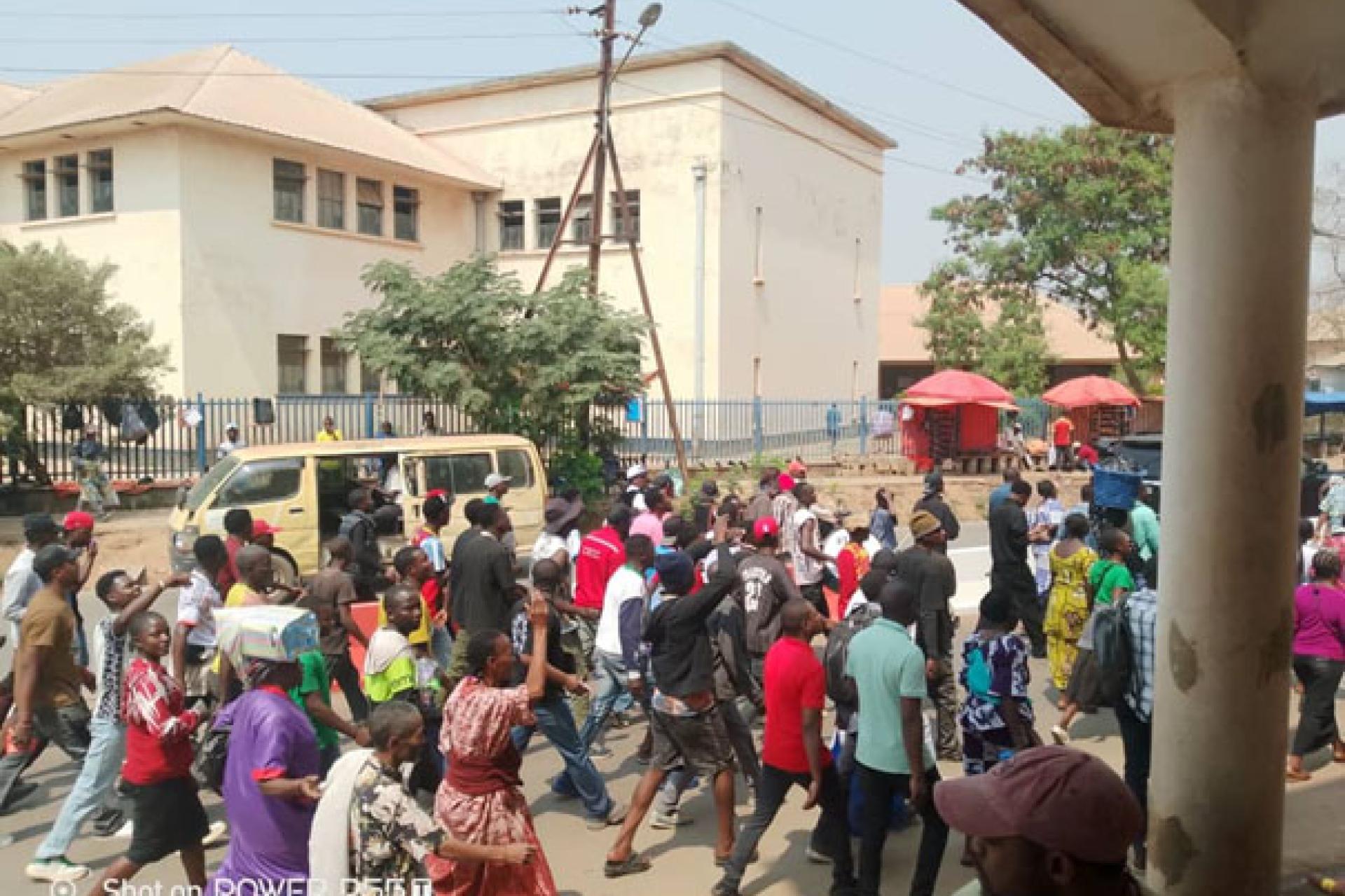
With only a few days remaining before the deadline set for the evacuation of the Mzée Laurent-Désiré Kabila Market, traders are showing no signs of backing down. Between August 10 and 15, several vendors once again took to the streets to seek the intervention of provincial lawmakers and civil society organizations. They are particularly opposed to being relocated across several markets in Lubumbashi and are asking for more time to prepare for their move.
The standoff surrounding the Mzée Laurent-Désiré Kabila Market, commonly known as Lusonga, continues. As August 20, 2026 approaches—the date by which vendors are expected to have vacated the site to allow modernization works to begin—traders continue to make their voices heard.
During the week of August 10 to 15, several vendors once again demonstrated in an effort to appeal to provincial lawmakers and various civil society organizations. At the heart of their demands is their opposition to being dispersed across several markets in the city.
Vendors Demand a Single Temporary Site
The provincial government plans to temporarily distribute the traders among four markets: the Ruashi Central Market, Kamalondo Market, Kaseba Market, and Plaine Market in the Kampemba municipality.
The vendors oppose this solution. They argue that such dispersion could disrupt their businesses and, more importantly, separate them from their regular customers.
For these traders, the Mzée Market is a major commercial hub where vendors have built a loyal customer base over the years. Being relocated to different neighborhoods across Lubumbashi therefore raises concerns about a significant decline in turnover.
These concerns are particularly acute because the deadline comes just as the new school year approaches. Many trading families are currently facing significant expenses related to school fees, supplies, and other back-to-school costs.
Vendors Request an Additional Six Months
Speaking to Mining and Business Magazine, some traders proposed an alternative: granting them an additional six months before requiring them to permanently vacate the market.
They argue that this additional time would allow them to better organize themselves financially, prepare for the relocation, and find solutions to preserve both their customer base and their income.
“We are not opposed to the modernization of the market. We are only asking for time to prepare,” one of the vendors interviewed explained.
Other traders are also calling on the authorities to prioritize a single temporary relocation site rather than dispersing them across several markets.
According to them, such an arrangement would help preserve some of the market’s existing commercial dynamics and make it easier for vendors to return once the modernization works are completed.
Authorities Maintain the Deadline
For the authorities, however, clearing the site remains necessary to allow the market modernization project to begin.
The Lubumbashi City Hall is therefore asking traders to comply with the August 20 deadline.
The provincial government had announced the temporary relocation of vendors to the markets of Ruashi, Kamalondo, Kaseba, and Plaine. The stated objective is to allow construction work to proceed while maintaining commercial activities at different locations across the city.
Between Modernization and Economic Survival
With approximately 17,000 vendors affected, the issue now extends far beyond the reconstruction of a single market. It also raises the question of how to protect the economic activities of thousands of small traders whose daily income depends heavily on their location.
With only a few days remaining before August 20, provincial authorities and vendor representatives therefore face a major challenge: finding a balance between the urgent need to modernize a strategic commercial infrastructure for Lubumbashi and the need to preserve traders’ livelihoods during the transition period.
The ability of both sides to resume dialogue could determine what happens next, as the deadline approaches and opposition remains strong on the ground.
Héritier Maila
About The Author

Commentaires