
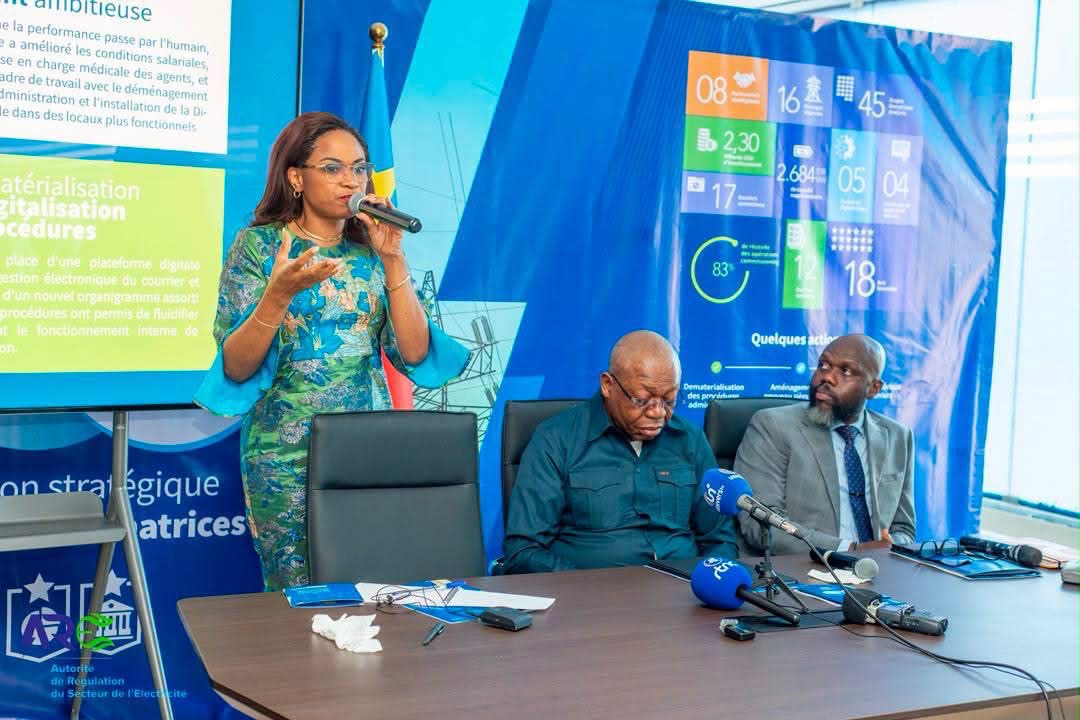
Recently appointed as Director General of the Electricity Regulatory Authority (ARE), Soraya Aziz is leading efforts to strengthen the regulatory framework and attract greater investment into the Democratic Republic of Congo’s power sector. Speaking to Mining & Business during the Katanga Business Meeting (KBM), she outlined the country’s energy ambitions and the reforms designed to expand electricity access nationwide.
A new momentum for the electricity sector
Soraya Aziz brings extensive experience from both the mining industry and the National Rural Electrification Agency (ANSER), where she focused on investment promotion and stakeholder engagement.
She assumes leadership of ARE at a time when the Congolese government is introducing new leadership across key energy institutions and accelerating sector reforms.
Regulating a liberalized electricity market
Established following the liberalization of the electricity market in 2014, ARE is responsible for regulating competition, issuing licenses, protecting consumers and ensuring a predictable investment environment.
The institution also advises the government on policies aimed at expanding electricity access throughout the country.
Creating a more attractive investment climate
According to Aziz, one of ARE’s primary objectives is to simplify administrative procedures, improve transparency and strengthen investor confidence.
A stable and predictable regulatory framework, she argues, is essential to mobilize the significant capital required to modernize the country’s electricity infrastructure.
Targeting 62% electricity access by 2030
The Democratic Republic of Congo aims to increase national electricity access to 62% by 2030, with universal access targeted by 2045—and potentially earlier if implementation progresses faster than expected.
ARE is supporting this objective by developing regulatory mechanisms that facilitate investment and accelerate project implementation.
Supporting decentralized energy solutions
Aziz believes decentralized electricity projects will play a major role in expanding access, particularly in underserved communities.
Current legislation allows qualified operators to manage the full electricity value chain, from generation to distribution and commercialization, encouraging innovative local solutions.
Building a national energy cadastre
One of the planned reforms is the creation of a national energy cadastre, which will map existing infrastructure, identify future energy needs and provide investors with greater visibility on available opportunities.
The initiative also aims to centralize sector data and reduce licensing delays through a more efficient digital process.
Electricity as a driver of economic growth
Aziz emphasized that reliable electricity is fundamental to the country’s economic transformation.
She noted that the mining sector alone currently faces an estimated 1.5-gigawatt electricity deficit, highlighting the importance of accelerating investment across the energy sector.
By strengthening regulation and improving the investment environment, ARE hopes to expand electricity access while supporting long-term economic development.
About The Author

Commentaires