
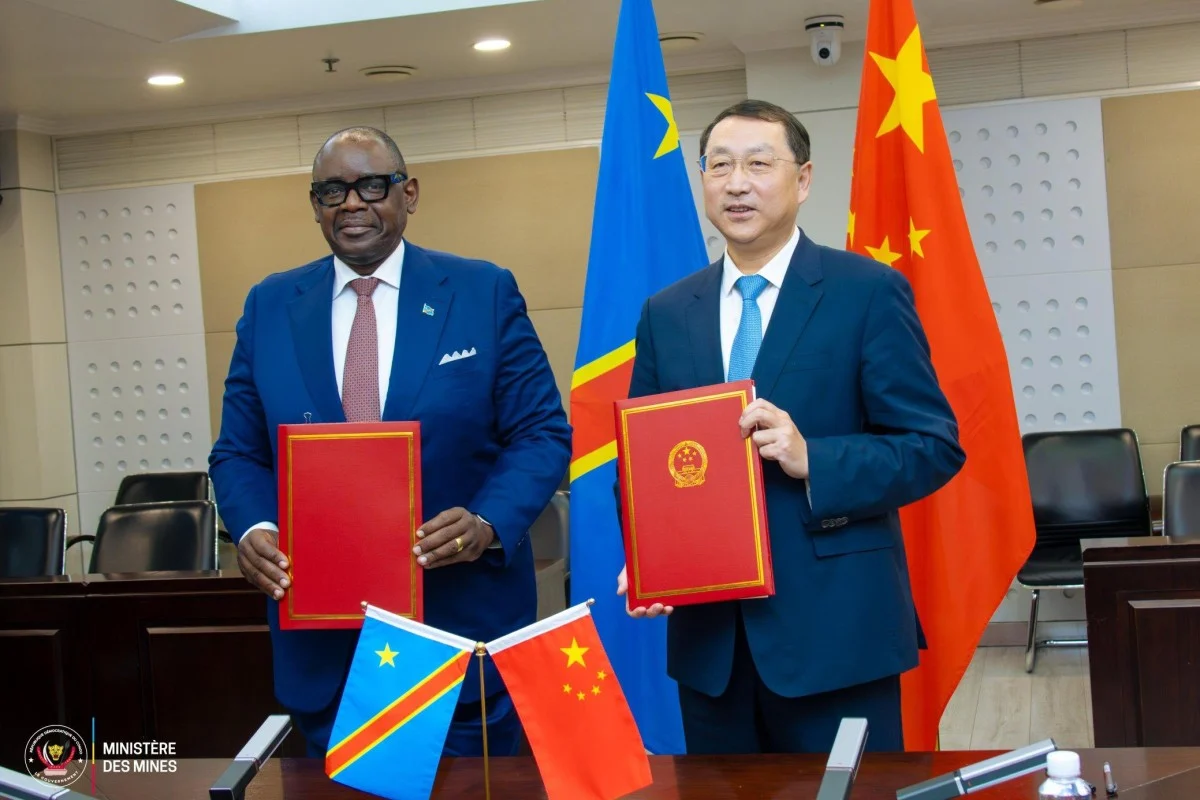
China has taken a new step in its strategy to secure access to strategic minerals. Faced with rising geopolitical tensions and increasing competition for resources essential to the global energy transition, Beijing has decided to tighten control over its mining investments abroad.
This move follows the implementation of new regulations under China’s Mineral Resources Law. The objective is to secure access to critical raw materials such as cobalt, copper, lithium, and rare earth elements, all of which are essential for batteries, electric vehicles, and advanced technologies.
A New Strategic Tool
To implement this policy, Chinese authorities have assigned a central role to Guangyan International, a state-owned company created in 2024 with a capital of 60 billion yuan, equivalent to nearly 9 billion US dollars.
Its mission is to support, coordinate, and in some cases co-finance Chinese mining investments around the world. The company will work closely with the National Development and Reform Commission (NDRC), China’s main economic planning body.
Through this mechanism, Beijing aims to reduce fragmented overseas initiatives, strengthen strategic oversight of mining projects, and limit political and regulatory risks.
A More Competitive Global Environment
The decision comes at a time when several resource-rich countries, including the DRC, Zimbabwe, and Indonesia, are seeking greater benefits from their natural resources through local processing and a fairer distribution of mining revenues.
At the same time, the United States and its allies are working to reduce their dependence on supply chains dominated by China, intensifying global competition for critical minerals.
For Beijing, these resources are now considered a matter of national security and a key driver of economic, industrial, and technological power.
The DRC’s Strategic Position
For the Democratic Republic of Congo, which holds the world’s largest cobalt reserves and is among the leading copper producers, this development confirms the strategic importance of its mineral wealth.
The creation of this new Chinese oversight mechanism demonstrates that Chinese investments are no longer driven solely by commercial considerations but are part of a broader strategy to secure long-term access to critical resources.
In a world where control of strategic minerals is increasingly linked to sovereignty, the DRC remains a central player in the global competition for the resources of the future.
Héritier Maila / DeskEco
About The Author

Commentaires