
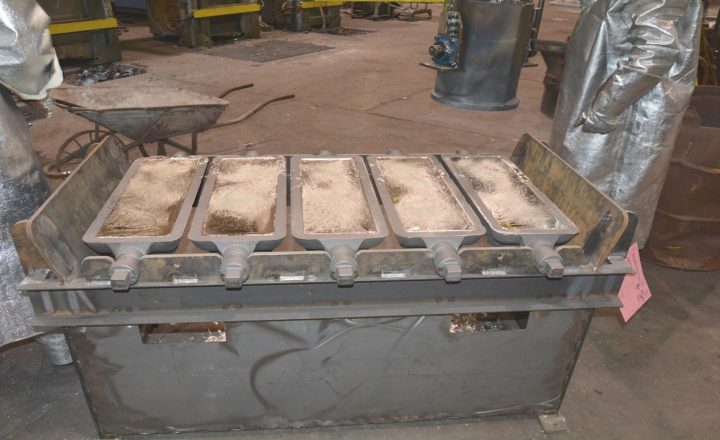
Congolese tin is set to conquer a new market. Under an agreement announced on 9 November 2026 by Alphamin Resources, part of the output of its Bisie mine, located in the Walikale territory of North Kivu, will be earmarked to supply the future Tin Ridge industrial facility being developed by the US company Nathan Trotter & Co.
Planned for an initial period of two years, the commitment covers a volume of up to 3,600 tonnes of contained tin per year. This quantity represents slightly less than 20% of Bisie’s targeted annual output, estimated at around 20,000 tonnes. For Alphamin, the deal is an opportunity to diversify its commercial outlets and strengthen its presence in the Western market.
Valued at about 65 million US dollars, the Tin Ridge project is under construction in Henry County, Virginia. Production is expected to start in 2027. The facility is designed to process both mining concentrates and tin scrap. At full capacity, it should also create about 118 jobs.
Washington wants to secure its supplies
Beyond its commercial benefits, the agreement responds to a strategic issue for the United States: developing its domestic processing capacity and reducing its dependence on foreign supply chains. Tin is an important raw material for several industries, notably electronics, semiconductors, defence equipment and advanced technologies.
By supporting the construction of new refining capacity on its territory, Washington seeks to secure access to the minerals its industry needs. In 2024, the US Department of Defense had already granted Nathan Trotter a 19 million dollar envelope to support the development of its tin processing activities.
For Alphamin, the partnership also marks a shift in its commercial strategy. Until now, about 70% of its concentrates were shipped to China’s Yunnan province, where processing costs are particularly competitive. The new contract does not, however, mean abandoning the Chinese market, which is expected to continue absorbing most of its output.
Logistics, a challenge to watch
Delivering on the agreement will depend notably on the completion of the US smelter and on the regularity of supplies from eastern DRC. The Bisie mine suspended operations in March 2025 because of the deteriorating security situation, before gradually resuming production in April of the same year.
For the DRC, this rapprochement with an American industrial player illustrates the growing interest of major powers in its mineral resources. It is also a new test for the strategic partnership between Kinshasa and Washington. It remains to be seen to what extent this commercial dynamic can, over time, bring more industrial and economic benefits to the producing country.
Héritier Maila
About The Author

Commentaires