
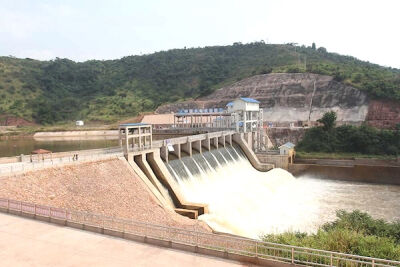
Adopted by ministerial decree signed on September 16, 2026, this mapping lists 3,349 hydropower sites, representing an estimated potential of 167.25 GW. Among the sites identified, 251 already have hydropower facilities, currently in operation or shut down.
For the government, this tool must now serve as a reference in the development of new projects. The mapping notably makes it possible to consolidate the information available on the various sites and to integrate it into a centralized geographic database in the form of a Geographic Information System (GIS).
A new tool for investors
One of the main contributions of this reform lies in the establishment of the HYDRO-RDC portal. This platform is intended to allow investors, project developers and other sector stakeholders to access the technical information available on the sites identified throughout the country.
The objective is notably to facilitate the identification of sites with favorable technical and economic potential, while improving the availability of data needed to prepare projects. The centralization of this information should also foster better coordination among the various administrations involved in the electricity sector.
This development comes as an extension of Ordinance-Law No. 25/025 of February 5, 2025 amending Congolese electricity legislation. Its Article 47 provides that the granting of concessions must be carried out in accordance with the energy mapping established by ministerial decree.
A mapping expected to evolve
The system is not fixed, however. The government specifies that the mapping may be regularly updated based on the discovery of new sites and the availability of new technical data. Concessionaires and other stakeholders concerned are thus called upon to contribute to its updating.
For the DRC, which has significant hydropower potential but faces considerable needs in terms of access to electricity, the challenge is now to transform this knowledge of the potential into projects that are actually developed.
With 167.25 GW identified across 3,349 sites, the mapping thus provides a new working basis for energy planning, investment preparation and the expansion of electricity supply throughout the national territory.
MB – ACTUALITE.CD – ENQUETE.CD
About The Author

Commentaires