
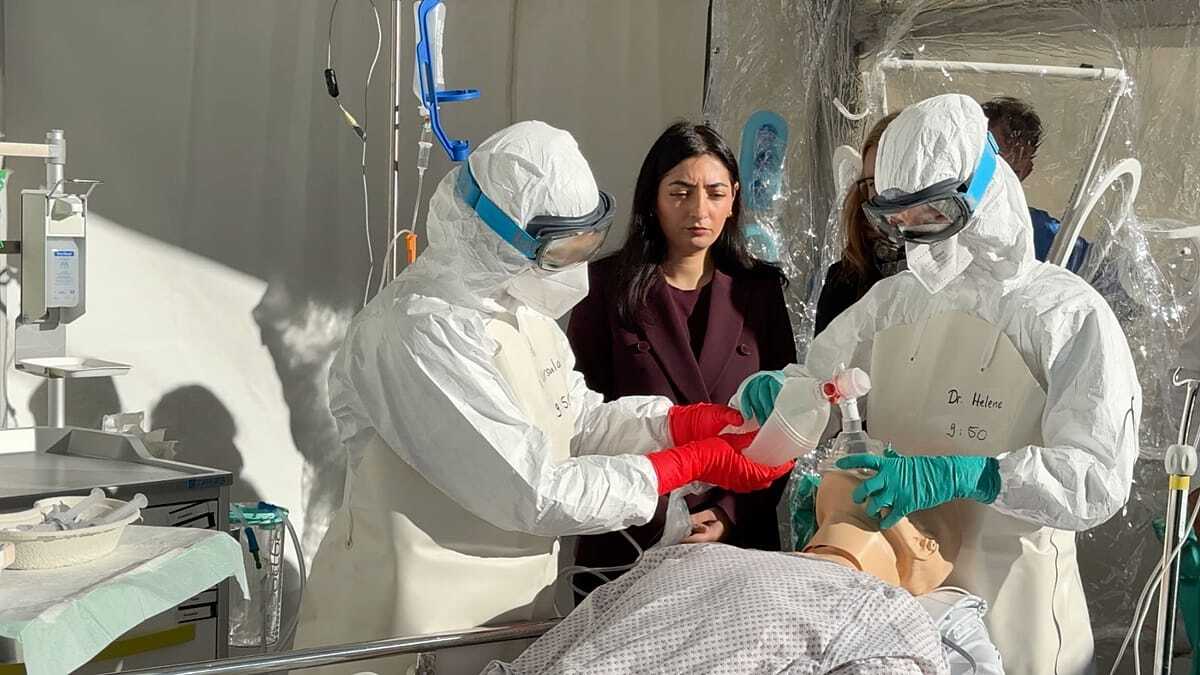
AN EPIDEMIC DIFFICULT TO CONTAIN
Seven provinces and 65 health zones are affected. Ituri remains the epicenter, with 6,734 cases and 3,177 deaths. In total, 899 patients are hospitalized or isolated and 2,418 people have recovered. Late detection, poorly identified transmission chains, insecurity and displacement complicate the work of the teams. Deaths in the communities show that some patients do not access care quickly enough.
The Bundibugyo virus has neither an approved vaccine nor an approved specific treatment. The response relies on screening, isolation, supportive care, contact tracing and infection prevention.
KENYA ON ALERT
Kenya confirmed on October 5 the death of a man who had stayed in the DRC and transited through Uganda before reaching Nairobi. On October 14, the authorities announced a second case, a close contact of the first patient, placed in quarantine before the onset of symptoms. Of 128 identified contacts, 113 had been found and 108 placed in quarantine; the search continued for the others.
In a region where tourism matters greatly, this alert is being closely followed. Kenya is a major tourist destination in East Africa. While the economic impact is not established, the epidemic could strengthen health checks and worry travelers. The WHO advises against restrictions on travel and trade.
700 MILLION DOLLARS TO BE CLARIFIED
The financing of the response raises questions. The director general of Africa CDC, Jean Kaseya, has asked for explanations on the tracking of the funds. According to Radio Okapi, 926.66 million dollars would have been disbursed by the partners, while more than 700 million would not be clearly traced. The National Institute of Public Health reportedly indicated that it had traced more than 200 million of them, including nearly 100 million still unused.
These figures call for clarifications on the sums promised, disbursed and spent. They do not, by themselves, prove embezzlement. But as the epidemic continues to kill, transparency is essential to verify that the money reaches the health centers, the teams and the affected communities. The response is also played out in the capacity to account for funding in the DRC as well.
Héritier Maila
Reference sources: World Health Organization (WHO) · Radio Okapi — Financing of the Ebola response
About The Author

Commentaires