
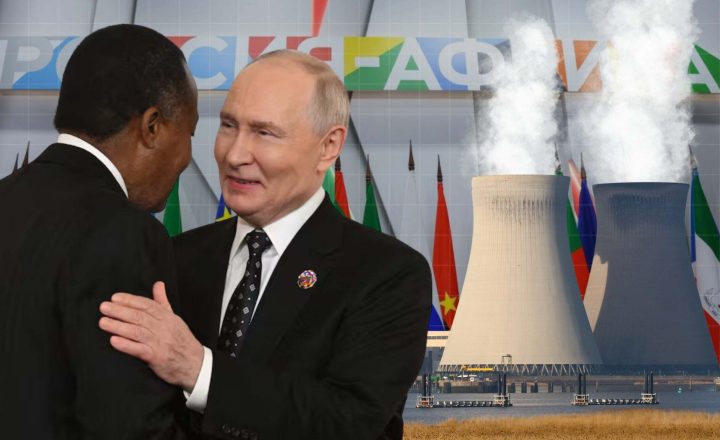
A cooperation to consolidate
Bringing together representatives of 48 African countries, including several heads of state and government, the Moscow meeting marks a new stage in the rapprochement between Russia and the continent. After Sochi in 2019 and Saint Petersburg in 2023, this third meeting comes in an international context marked by the reshaping of economic alliances and the search for new trading partners.
Economically, trade between Russia and Africa exceeded $27 billion in 2025, according to figures put forward by the Russian authorities. This level nevertheless remains below the $40 billion target announced at the first Sochi summit. The gap between stated ambitions and trade results highlights the scale of the work that remains to be done.
Energy, agriculture and strategic resources
The prospects for cooperation concern several sectors essential to the development of African economies. Energy is among the areas where Moscow wants to strengthen its position, particularly through hydrocarbons, civilian nuclear technologies and energy equipment.
Agriculture is also an important axis. Russia is seeking to consolidate its outlets for cereals, fertilizers and other agricultural products, while several African economies remain confronted with food security and agricultural productivity challenges.
Mineral resources constitute another potential area of cooperation. Africa’s subsoil, rich in strategic minerals essential to modern industries, attracts the interest of many international partners. For producing countries, however, the challenge is no longer only to attract foreign buyers or operators, but also to develop local processing, infrastructure and technical skills.
From announcements to concrete investments
Beyond political declarations, the summit will have to be assessed in light of its economic results. African countries expect in particular identified financing, technology transfers, job creation and greater participation by local companies.
The Moscow declaration is to serve as a framework for cooperation for the 2027-2029 period. It remains to be seen to what extent the orientations adopted will be accompanied by financing and monitoring mechanisms capable of producing measurable results.
For Africa, the diversification of partners represents an opportunity, provided that the agreements concluded meet the development priorities of national economies. Russia’s presence on the continent will thus have to be measured less by diplomatic ambitions than by its capacity to contribute to production, industrialization and the creation of added value.
MB / DEUTSCHE WELLE
About The Author

Commentaires