
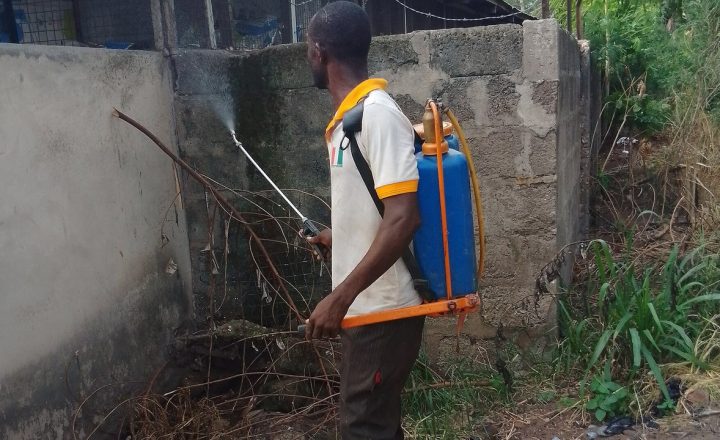
A product intended for agriculture is increasingly being used in homes to kill mosquitoes and other pests. A scientific study published on 29 October 2026 reports 22 cases of suspected poisoning in three major Congolese cities, reviving the question of pesticide control and use.
A misuse with health consequences
Marketed in the Democratic Republic of Congo (DRC), the insecticide Lava is gaining ground in households, notably in Kinshasa, Lubumbashi and Kolwezi. Originally designed to control pests in the agricultural sector, the product is now used by some individuals to fight mosquitoes, cockroaches and other household insects.
This practice, however, exposes people to health risks. A study published in the scientific journal Toxicology Communications reports 22 cases of suspected poisoning after indoor use of products containing dichlorvos, notably Lava and Sniper. The cases were recorded between 7 December 2025 and 25 February 2026 in the three cities mentioned above.
Of the 22 people affected, 14 were hospitalised. The reported symptoms mainly include headaches, breathing difficulties, dizziness and nausea. One patient admitted in Kinshasa even fell into a coma before recovering.
Dichlorvos at the heart of the concerns
The main concern is dichlorvos, an organophosphate substance found in Lava’s composition. According to the researchers, this product is classified among the highly hazardous pesticides by the World Health Organization (WHO).
The study stresses that the poisonings occurred notably after spraying in closed rooms, sometimes at night, without protective equipment and in the presence of other occupants of the home. The use of improvised containers to spray the product is also a source of concern.
The authors point out, however, that the absence of biological measurements of cholinesterase activity does not allow all cases of poisoning to be formally confirmed.
A challenge for Congolese regulation
Beyond the individual risks, this situation raises the question of the marketing, labelling and control of plant protection products in the DRC. Intended for agricultural or professional use, some insecticides end up in household consumer channels without users necessarily having the necessary information on how dangerous they are.
The researchers note that a ban on several products containing dichlorvos was decided in the DRC on 26 August 2026. The effective enforcement of this measure and the monitoring of distribution channels are now important issues.
For a country facing health and environmental challenges, pesticide control is therefore not only a matter of agricultural policy. It also concerns public health, consumer protection and household safety. Raising public awareness and strengthening the monitoring of poisonings appear essential to prevent new cases.
Héritier Maila / RFI
About The Author

Commentaires