
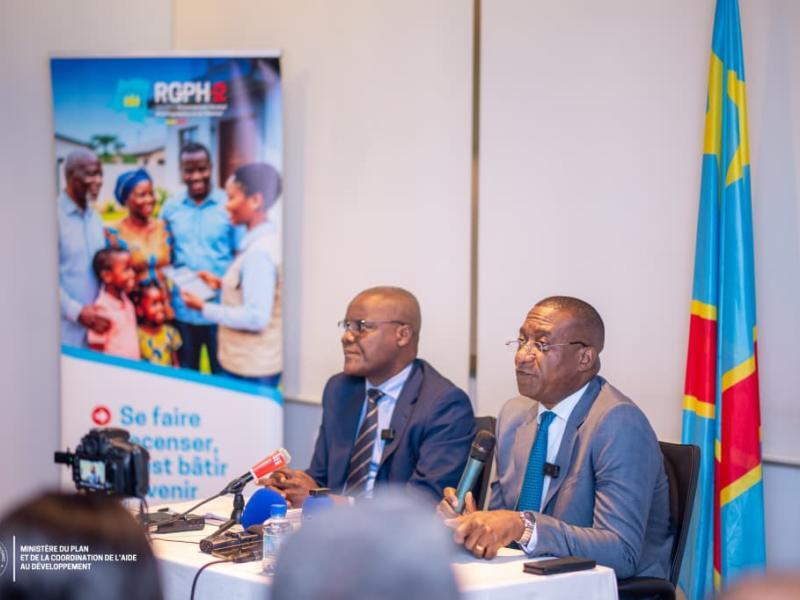
According to the minister, this phase should make it possible to identify and locate buildings and to count households before the next stages of the operation. It responds, he argued, to a goal of the State: to better know the population and the territories in order to better plan, govern and serve citizens.
A prerequisite for the 2027 enumeration
For one month, the cartographer agents will canvass the neighborhoods of the capital to identify households, dwellings and infrastructures, and to prepare the areas that will be used for the general enumeration planned for July 2027.
Guylain Nyembo stressed that sustainable development requires data that is available, up to date and territorially precise, capable of allowing a better distribution of public resources and a response adapted to the needs of populations.
Call for cooperation from authorities and populations
The Minister of State invited provincial, municipal, territorial and local authorities, customary chiefs, and community and religious leaders to facilitate the work of the teams in the field, to raise awareness among populations and to create favorable conditions for the smooth running of operations.
He also called on the population to cooperate with the cartographer agents and to provide them with the necessary information, while asking the security services to ensure the protection of the teams and their equipment. He also expressed his gratitude to the DRC’s technical and financial partners for their involvement in the RGPH-2 process.
At the end of the ceremony, the Minister of Planning was to make a field visit and symbolically take on the role of cartographer agent of the day, accompanying the team responsible for visiting the first household.
ACP – M&B
About The Author

Commentaires