
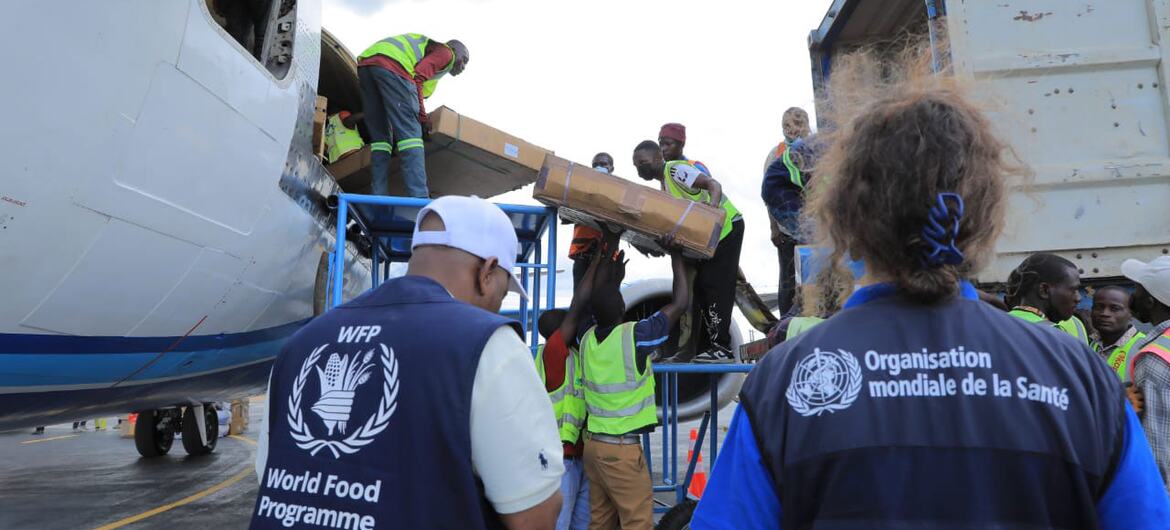
May 24, 2026. The suspension of air links to Bunia by Congolese authorities marks a new stage in the management of an Ebola epidemic that is significantly worsening in the eastern Democratic Republic of the Congo. This decision, aimed at containing the virus’s spread, comes as the health situation progressively outpaces the operational capacities of the response teams, particularly regarding contact tracing.
Recently published data reflects a worrying dynamic: 91 confirmed cases, 867 suspected cases, and 204 probable deaths. Beyond these numbers, however, it is primarily the inability to effectively track transmission chains that alarms authorities. Only 20% of the 1,745 identified contacts are currently being monitored, revealing a critical breakdown in the epidemiological surveillance system—which is nevertheless central to the fight against Ebola.
The epidemic’s location intensifies these concerns. Bunia, located in the Ituri province, is in immediate proximity to the Ugandan border, in a region characterized by high population mobility and intense cross-border trade. This configuration mechanically increases the risk of regional diffusion, as highlighted by East African health officials.
In addition to these geographical constraints, a decisive scientific factor complicates the situation: the Bundibugyo strain of the Ebola virus, involved in this outbreak, remains poorly documented and has neither an approved vaccine nor a validated specific treatment. In this context, authorities are forced to rely on classic measures—case isolation, contact tracing, and travel restrictions—the effectiveness of which depends heavily on logistical capacities and the cooperation of local populations.
The structural fragility of health systems in the region further complicates the response. Already under pressure, these systems must absorb an influx of cases while maintaining basic services, in areas sometimes marked by insecurity and access difficulties.
On the international stage, the response from the United States—strengthening airport controls, mobilizing emergency funding, and deploying specialized teams—illustrates the fear of a spread beyond regional borders. It also highlights the crucial role of external partners in managing health crises where national capacities quickly reach their limits. Implicitly, this epidemic highlights the persistent vulnerabilities of surveillance and response systems in Central Africa, as well as the need for sustainable investments in public health infrastructure, beyond emergency responses.
Editorial Team – M&B – May 24, 2026
About The Author

Commentaires