
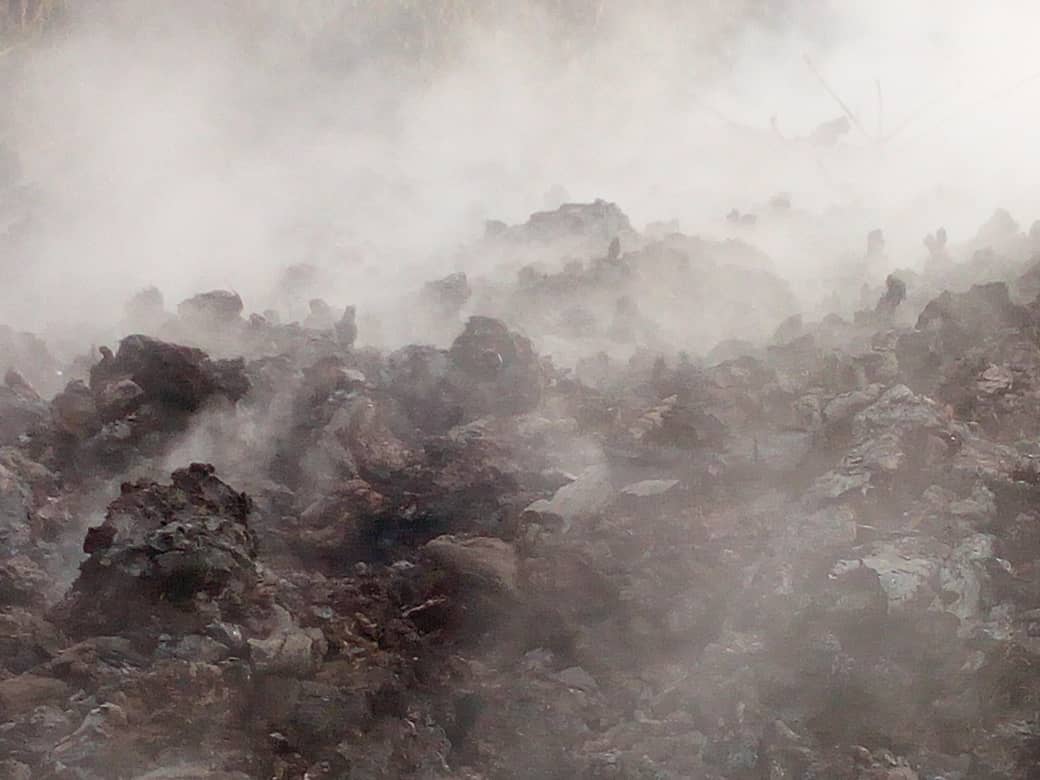
According to the results presented by the consortium, SO₂ concentrations recorded at Manomapia reached a peak of 0.7 ppm, or about 1,834 µg/m³ over a rolling ten-minute average. This value exceeds the 500 µg/m³ threshold set by the World Health Organization (WHO) guidelines for short-term exposure.
The survey combines environmental and health data with testimonials gathered from the populations. The qualitative component is based on 47 in-depth interviews, while the quantitative monitoring involved 209 participants. The investigators report in particular persistent coughs, eye irritation, nosebleeds as well as other irritative symptoms observed more frequently in the Manomapia area than in the Mutende control area.
Consequences that go beyond health
Beyond physical symptoms, the report mentions socio-economic repercussions on households. Some families reportedly devote a significant part of their income to buying medicine or using traditional remedies to relieve, in particular, children’s respiratory problems. Corrosion of metal roofing sheets and psychological distress are also among the reported impacts.
The testimonials gathered also refer to serious illnesses and deaths that some residents associate with industrial emissions. These claims, however, remain testimonials and do not, by themselves, make it possible to establish a medical causal link.
TFM disputes the link with the pathologies
TFM rejects the accusations establishing a direct relationship between the symptoms described by residents and the activities of the 30K plant. According to the company, no direct causal link can be established between the reported pathologies and the facility’s emissions. TFM also states that no case of illness or death attributed to SO₂ has been recorded among workers at the 30K plant.
Faced with these divergent positions, the consortium recommends in particular an independent technical inspection to assess the emissions recorded and the effectiveness of the filtration and environmental protection devices installed at the site.
The case thus brings back to the center of concerns the issue of independent monitoring of air quality around mining sites and the protection of neighboring communities, in a context of intensifying industrial activities in Lualaba.
Héritier Maila / Radio Okapi
About The Author

Commentaires