
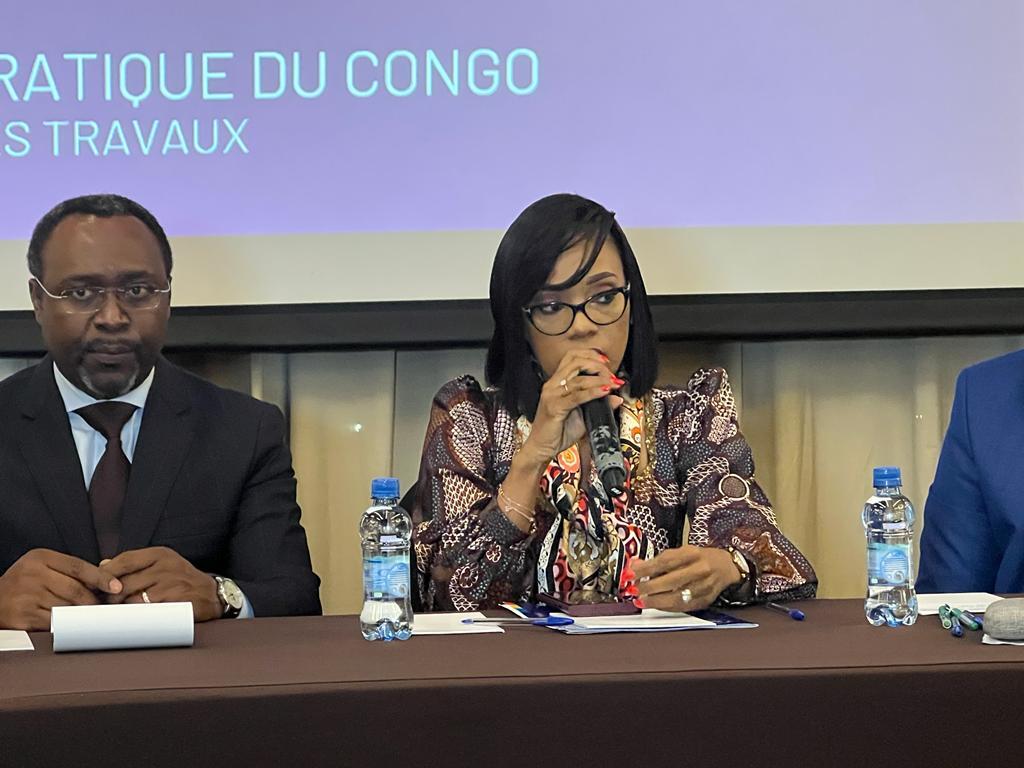
This second wave concerns nine districts of the capital: Kasa-vubu, Barumbu, Matete, Kimbaseke, Lingwala, Bandalungwa, Selembao, Kintambo and N’djili. The minister wants to gradually extend the program to the sixteen land districts of Kinshasa, in order to impose everywhere the same requirements of rigor, conservation and traceability.
An initial quantitative assessment
The first, pilot phase was launched last August after the training of 250 agents and executives, deployed in seven districts. According to the minister, more than 600,000 files have been identified to date; more than 20,000 have already been reconditioned and nearly 25% digitized.
O’Neige N’sele described these results as encouraging, while emphasizing the scale of the remaining work. She recalled that land archives are not simple administrative documents, but the memory of land rights, each file referring to a right to be protected and each title to a step to be secured.
Digitization, she specified, is not limited to scanning: it requires prior work of identification, sorting, inventorying and securing of physical archives, with a view to building a reliable and lasting digital memory.
An institutional framework already in place
The training is provided by the National Institute of the Archives of Congo (Inaco), under a memorandum of understanding signed with the Ministry of Land Affairs. The launch ceremony brought together representatives of Inaco, the land affairs secretariat, UN-Habitat and various technical partners.
The project is part of a bill on the modernization of the land administration. In a country where securing titles remains a major economic issue, particularly for real estate and mining investment, the reliability of archives is a prerequisite for the traceability of land rights.
ACP – M&B
About The Author

Commentaires